
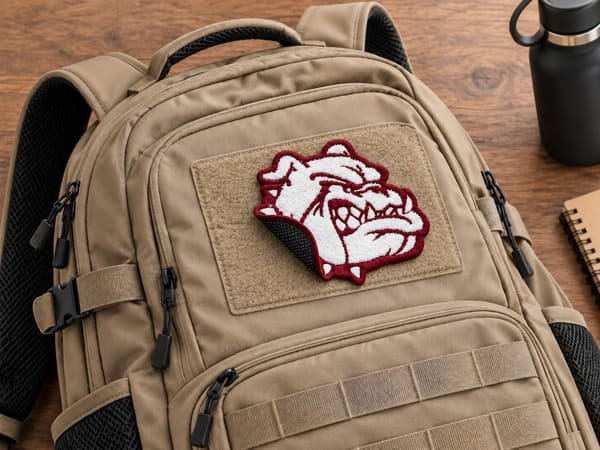
A hook-and-loop patch is a removable badge that attaches to a matching loop surface, making it easy to change a name, logo, or design. Read on to learn how the fastening works, where it is useful, and what to check before choosing a patch for your clothing or gear.
Understanding Hook-and-Loop Patches
What Is a Hook-and-Loop Fastener?
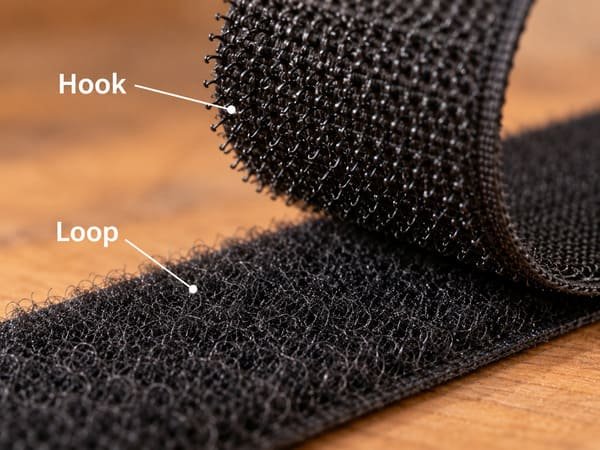
Hook and loop is a reusable fastener with two surfaces: one covered in tiny hooks and the other in soft loops. Press them together to fasten; peel them apart to release.
You may also hear it called “Velcro” in everyday conversation. VELCRO® is a brand name; hook and loop is the general term for this type of fastener.
What Is a Hook-and-Loop Patch?
A hook-and-loop patch is a removable badge with hook material attached to its back. The hooks grip a matching loop panel on your clothing or gear, allowing you to remove and replace the patch while the panel stays in place.
The front can be embroidered, woven, printed, or molded from PVC. “Hook and loop” describes the attachment method, so you can choose the backing separately from the style of your design.
What Are Hook-and-Loop Patches Used For?
Hook-and-loop patches are useful when you want to change a name, role, or design while keeping the same garment or piece of gear. Common applications include identification on clothing and interchangeable badges on equipment.
Identification on Uniforms and Clothing
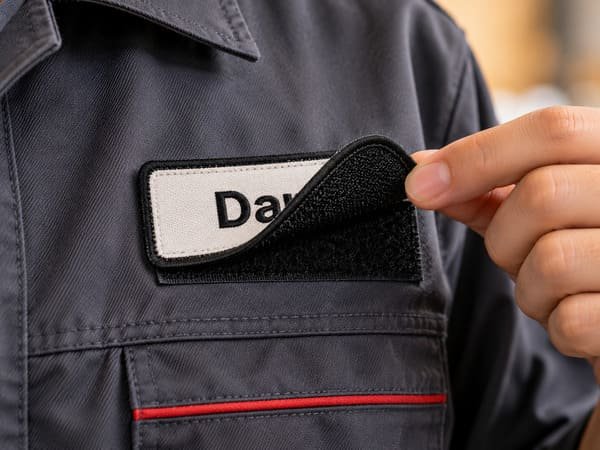
Name patches for workwear and school uniforms are among the applications we regularly make. On garments with matching loop panels, you can replace a name when the wearer changes or move the same patch between compatible uniforms.
For team or event clothing, removable name and role patches can help identify staff, volunteers, or participants. When an assignment changes, you can update the identifier without sewing a new badge onto the garment.
Personalization and Identification on Equipment
An outdoor backpack with a loop panel can carry a name patch, club badge, or personal design. Outdoor backpack patches are among the applications we regularly make. You can swap designs to suit different activities or move a patch to another compatible bag.
On sports or team bags, removable name or team patches help distinguish similar-looking equipment. Caps with loop panels offer another place to display interchangeable club or personal badges.
What Do You Need to Use a Hook-and-Loop Patch?
You need a compatible loop surface, enough usable space for the patch, and a secure way to keep that loop surface attached to your item.
A Compatible Loop Panel
Check the place where you want the patch to sit. Some uniforms, backpacks, and caps already have a soft loop panel designed for removable patches.
If your item has no loop panel, you will need to add one. Sewing is often a practical option for washable clothing or flexible bags, where the fabric repeatedly bends and moves.
If your item has no loop panel, you can sew one onto a suitable area. Adhesive-backed or iron-on loop panels are other options, but they must be suitable for your fabric and washing needs. Use heat only when both the panel instructions and the item’s care label allow it.
A Patch That Fits the Attachment Area
Measure the usable loop area, rather than the size of the whole pocket, sleeve, or bag panel. Include its shape: rounded corners, curved surfaces, and surrounding seams can affect how much space is available.
The hook backing should sit within the loop area. Unsupported edges are easier to catch and peel away, especially around bag straps or close-fitting clothing.
Benefits and Limitations of Hook-and-Loop Patches
Benefits
You can replace the patch without repeating the installation. Once the loop panel is in place, changing a name or design does not require sewing or ironing each new patch onto the garment.
You can use one patch on several compatible items. For example, a name patch can move between a jacket and a bag if both have suitable loop panels.
You can remove the patch for separate care. Take it off before laundering the garment, then clean or store it according to the patch’s care instructions.
These benefits are most valuable when you expect the patch to change over time. If the same badge will remain permanently in one position, the removable feature may offer less value.
Limitations
The panel remains visible when the patch is removed. Consider whether an exposed loop area suits the appearance you want, especially on casual clothing.
The fastening adds some thickness. The patch, hook backing, and loop panel form several layers. On lightweight clothing or a curved cap, flexibility and profile deserve attention.
Exposed hooks can snag other fabrics. Keep a loose patch away from delicate materials and cover the hook surface during storage.
Grip can change with use and condition. Lint, worn loops, incomplete contact, and edges catching on nearby objects can affect attachment. Hook and loop is reusable, but it does not provide unlimited service life.
If you want frequent changes, hook and loop is worth considering. For permanent placement, sewing may be more suitable; iron-on backing can be an option where the fabric and patch construction allow heat application.
How to Attach and Remove a Hook-and-Loop Patch
Once the loop panel is securely installed, attaching the patch takes only a few steps:
- Check both surfaces. Gently remove loose lint, hair, or threads that could interfere with the connection.
- Position the patch. Align it with the loop area before pressing it down, keeping the hook backing fully supported.
- Press across the whole patch. Work over the center, edges, and corners, rather than pressing only one spot.
- Check the attachment. Make sure the patch lies evenly and does not have an edge already lifting.
To remove it, support the garment or panel, lift a patch edge, and peel it back steadily. Avoid pulling sharply through the decorative stitching or yanking the patch from its center.
How to Care for Hook-and-Loop Patches
A few simple habits help keep the patch and fastening in good condition:
- Follow the care instructions for the complete patch. The decorative face, thread, backing attachment, and fastener may have different limits. Do not choose a wash temperature based only on the hook-and-loop material.
- Remove the patch before laundering the garment where practical. Clean the patch separately if its care instructions allow it, and avoid leaving exposed hooks where they can catch other items.
- Clear debris gently. Remove loose fibers without aggressively scraping the hooks or pulling apart the loop pile.
- Cover the hook side for storage. Use a matching loop piece or suitable loop display surface to reduce snagging and debris collection.
If cleaning does not restore the grip, inspect both halves. The loop panel on your item may be worn even when the hook backing on the patch still looks usable.
Choosing a Custom Hook-and-Loop Patch
Choose the patch around your artwork and the item it will be used on. These details are worth checking before you approve the design:
- Patch style. Embroidery gives the design a stitched texture, woven construction can suit fine lettering, sublimation can reproduce gradients, and PVC offers a molded finish. Choose the style that represents your artwork clearly at the finished size.
- Size and placement. Measure the intended attachment area and check how the patch shape will sit within it.
- Backing requirements. Confirm whether you need hook backing only or a matching loop piece as well. If you are adding a new loop panel, consider how it will be fixed to the item.
- Thickness and flexibility. A sample can help you judge how the patch sits on lightweight clothing, curved hats, or flexible bags.
Check spelling, colors, and dimensions on the design proof. If fit or feel matters, review a physical sample on the intended item before bulk production.
Frequently Asked Questions
Often, yes. For a fabric patch, sewing hook material onto the back can be an option, provided the patch can be stitched without damaging the design. If it already has an iron-on backing, check a suitable attachment method before applying heat or glue.
“Morale patch” describes the patch’s purpose or theme, often a personal, humorous, or expressive design. “Hook-and-loop patch” describes its fastening method, so a morale patch can use hook-and-loop backing, but the terms are not interchangeable.
Not necessarily. The backing should hold securely during normal use while still letting you remove the patch without excessive pulling. The best choice depends on the patch, the matching loop panel, and how you use them.
The fastening method alone does not establish whether the complete patch is waterproof. Check the face material, backing attachment, and intended conditions; water resistance depends on the specific construction.
Yes, if the patches are designed to fit the same usable panel area and use compatible backing. For a set of interchangeable names or designs, agree on the finished dimensions so each patch sits consistently.
Ready to Create Your Own Hook-and-Loop Patches?
Have a name patch or backpack design in mind? Send us your artwork or reference image, preferred size, quantity, and where you plan to use it.
At SML PATCH, we can help you compare patch styles, confirm the backing, and work out whether you need a matching loop piece. If you are unsure about the size, a photo of the attachment area is a useful place to start.